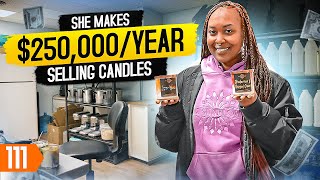
 01:0401:0412:3706:39
A candle business means pouring scented candles in your kitchen and selling them online, at local markets and wholesale to boutiques. The makers in these videos say how to start a candle business from home is mostly about testing: weeks of burn tests before your first sale, then a small line of four to six scents.
Testing comes before selling. Budget for it: one maker spent about $720 on testing alone. 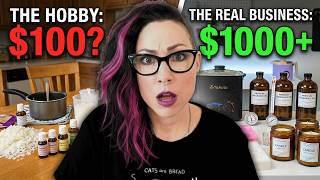 01:2503:45
 10:40
 08:13
Each clip opens at the exact moment on YouTube.
06:3308:1325:55 10:54
 12:09
 01:50
You buy wax, wicks, jars and fragrance oil from a candle supplier, test combinations until the candles burn safely and smell strong, then sell a small line of scents. The makers here started with $100–500 and sold first to friends, on Instagram and at local markets, then added their own Shopify site, Etsy and wholesale to boutiques. The money is in pricing: cost every candle including shipping and your time, because a $5 candle sold for $10 can't pay for growth. Candles sell best around the holidays and Mother's Day and slow down in summer. 01:04 25:3624:3720:10
 16:06
Four quick questions about the day-to-day work the creators describe.
Real US Google searches, and an example of local competition. Data from DataForSEO, 2026-11-24.
01:0709:32The smallest bet is about $100 of supplies and a batch sold on pre-order, the way two makers began. None of the sources gave resale prices for equipment, so we don't show a worst-case figure. The usual loss is leftover stock: untested fragrance bought in big bottles, or a launch scent that took one brand almost 3 years to sell through. 33:47 01:3308:0205:13
The order the makers recommend: test first, launch small, then add channels. Tick steps as you go; progress saves on this device.
One maker had to write a business plan with financial projections before she could sign a shop lease. Here's a one-page version filled in with this guide's figures. Swap in your own numbers. 04:03
| Products | 4–6 tested scents in one jar size; seasonal scents later 10:4609:29 |
|---|---|
| Startup budget | $500–1,000 realistic start; $1,500–2,500 from testing to launch 06:3318:07 |
| Prices | Cost per candle × 4 for retail, × 2 for wholesale; e.g. a 9 oz candle at $36 25:5523:02 |
| Monthly costs | Shopify $39 + ~$50 in apps; insurance $30–50; inventory software $19;  QuickBooks $20 08:2509:0109:3213:30 |
| Break-even | About 50 candles at retail to pay off a $750 start (our estimate) |
| Sales channels | Markets and friends first, Etsy or your own site, then wholesale to boutiques 10:5408:3908:29 |
| First goal | A first small batch sold on pre-order, money reinvested in supplies 33:4734:00 |
Candles are a fire risk, so the makers treat labels, testing and insurance as part of the product. This is what they reported, not legal advice: labelling, product safety and seller rules differ by country and state, so check your local rules and the safety standards that apply where you sell before you launch. 12:1809:28
| Topic | What the makers say | |
|---|---|---|
| Warning label | A front label plus a warning label on the bottom of every candle; about $30 of labels to start | 12:15 |
| Product liability insurance | Business insurance that covers product liability, about $30–50 a month | 09:2809:32 |
| Fragrance load | Stay within the wax maker's maximum; one maker won't go beyond 10% for safety reasons | 12:22 |
| Jars | Use jars made for candles that can withstand the heat | 16:51 |
| Burn testing | Test every wick size in your exact jar; testing never ends once you sell | 02:5816:23 |
| Lab testing | One founder had all products lab tested, which helped win big partnerships | 08:08 |
| Seller's permit | Get a resale certificate or seller's permit before you sell, so supplies are bought tax-free | 05:29 |
| Sales tax and structure | One maker remitted about $591 of sales tax on a season of markets; another brand moved from LLC to S corp on its accountant's advice | 13:3335:40 |
Most makers combine channels. Wholesale candle accounts with boutiques became the biggest channel for two of the brands here; none of the sources gave Etsy sales figures. 07:4719:46
| Channel | What the makers report | |
|---|---|---|
| Etsy | Cheapest way to start: no monthly fee, 20 cents per listing plus 20 cents when it sells | 08:3908:49 |
| Your own Shopify site | $39 a month; 85% of one maker's sales, fed by Instagram | 08:2511:52 |
| Craft and farmers markets | 13 events grossed $7,342; worst day $293 on a $150 booth, best $958 | 10:5404:3309:02 |
| Wholesale to boutiques | About 140–145 accounts for one brand, won mostly by email and follow-ups | 08:2915:33 |
| Faire | Under 10% of that brand's wholesale orders; waiting to be found is passive | 09:30 |
| Local stockists | A coffee shop in Seattle stocks one maker's candles | 12:11 |
First buyers for most makers; one founder's first drop of 120+ candles sold out before anyone had smelled them
01:5332:4634:14Shoppers can smell before buying and give honest feedback; booth fees run about $125–150 and results are hit or miss
30:1602:0019:00One maker grew from about 25 followers to her main sales driver, with about $3,500 of ads in a year
11:3414:52Etsy is cheaper to start (20 cents a listing); Shopify is $39 a month. One maker gets 85% of sales from her own site
08:4908:2511:52Start with shops in your own town; one brand built about 140 accounts, mostly by email, with Faire under 10% of orders
11:3408:2909:30One founder emailed editors of candle gift lists and landed a national magazine within six months
26:29Start from what one candle costs you to make, then set retail and wholesale prices. These are the figures the makers gave.
| Job | Price | Sources |
|---|---|---|
| Soy wax (budget 464) | $2–3 per lb before shipping | 03:18 |
| Fragrance oil | $3 for a 1 oz sample; ~$1.40/oz in bulk | 07:42 |
| 8 oz mason jar / tin with lid | ~$0.80 / ~$1 | 17:0717:17 |
| Wick stickers | 2–6 cents each | 16:31 |
| Example cost to make one candle | $5 (one brand's example) | 19:23 |
| Wholesale price | Cost × 2 (one maker's formula) | 25:55 |
| Retail price | Cost × 4 (one maker's formula) | 25:55 |
| Typical retail range | $10–60 | 08:56 |
| 9 oz candle, 70–72 hour burn | $36 | 23:02 |
| 5 oz tin / box of four | $19.99 / $49 | 29:0529:08 |
| Mother's Day gift set at a market | $50 | 06:20 |
27:0301:4924:3720:1025:4323:1005:2713:3711:1509:0036:0017:0416:0616:0207:0717:1202:5810:4003:3610:4613:02 Amazon or retail stores. 03:3321:4216:5103:2211:5415:5316:0613:0519:59• Sell locally and skip the website at first 18:5630:16• Hit or miss, and you pay to be there 19:00
The mistakes the creators say they made, ranked by how many of them mention it.
03:2608:0205:0502:2105:1301:4927:0320:1009:4410:4119:40Candle business income here comes from the makers' own businesses and is mostly revenue, not take-home pay. Big-brand totals and projections are listed separately below.
10:5414:0412:3703:2400:48* Revenue, not take-home. Margins vary: one founder keeps 20–30% on candles, the sisters say about 50%. The 2020 figures came during a pandemic boom in candle sales. Early on, the same sisters were happy to make $40 a market day.
33:4719:5908:3911:5230:1607:4719:4605:5104:1603:09Real operators from the source videos. Results are as they told them.
01:0401:0412:3706:3901:49 YouTube and started with $500 while working a 9-to-5, then opened a shop with candle-making classes.~$150,000 in year one online; ~$600,000 last year01:4925:3603:2403:3801:3301:3307:5714:5701:5001:5001:0007:4712:2216:5102:5816:2322:5730:2330:3308:4319:5717:0429:12
Labels show whether each speaker runs the business and whether they sell something. Dates are approximate, from YouTube's “x years ago”.