 00:0300:0302:3406:5214:2409:20
A clothing brand means designing your own pieces, paying a print shop or manufacturer to make a small run, and selling them as a clothing brand online in limited drops. Whether you want your own clothing brand or to start a clothing line, most of the 10 founders here began with one product and about 50 units, sold first to friends and family, and put every dollar back in for years before paying themselves.
No money spent yet. You'll know your real cost per shirt before you pay for a single design.  13:1914:21
 01:1401:09
Each clip opens at the exact moment on YouTube.
01:02 09:39
 21:4906:44
 04:43
 04:36
You design a small range (often one hero piece), have it made either as graphics printed on blank garments by a local print shop or as custom cut-and-sew pieces from a manufacturer, then sell it from your own Shopify site in limited drops. Minimum orders run from 30–50 printed tees to about 100 custom pieces, and each sample costs $30–200. The founders got their first sales from friends, family and their own posts, then grew with micro-influencers, small ad tests and an email list. How hard is it? It is a slow, cash-hungry clothing business: listed apparel companies net under 4%, and several founders paid themselves nothing for two years or more. (Print on demand, where nothing is made until it sells, has its own guide.) 01:0909:39 09:2422:0802:0700:3806:4112:18
Four quick questions about the day-to-day work the creators describe.
Real US Google searches, and an example of local competition. Data from DataForSEO, 2026-11-24.
13:3414:2104:1613:1301:1212:14Your real risk is stock that doesn't sell or arrives wrong: one founder's 50 hats sold a single unit on drop day, another lost about $30,000 on a bad bulk order. None of the 10 gave a resale value for unsold stock, so we don't show a worst-case figure. Pre-orders, a first run of about 50 and paying through Alibaba trade assurance limit the damage. 02:4807:4004:4334:4813:27
Our estimate Counted in sold-out drops of 50 tees. Marshall Crews pays about $21 for a quality printed tee and sells it for about $60, so 50 sold brings in about $3,000 against about $1,050 of stock, leaving about $1,950 toward a $750 median setup, before ads, shipping and fees. A drop that doesn't sell out may not pay back at all. 21:5422:0234:48
The order most founders recommend: niche and product first, a small paid run before a big one. You can't really do it with no money: the leanest start here was $100, and a first print run is $210–450. Tick steps as you go; progress saves on this device.
A one-page plan filled in with this guide's figures, starting from the founders' three questions: who, what, and why you. Swap in your own numbers. 13:19
| Customer | One narrow group of people like you, described in detail 13:3414:21 |
|---|---|
| Product | One hero piece, or 2–4 items in the first drop 13:13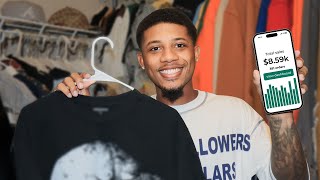 22:59 |
| Production | Printed blanks from a local shop ($7–15 a tee) to start; cut-and-sew from a vetted Alibaba manufacturer later 01:0213:27 |
| Startup budget | $210–450 for a first printed run plus about $499 of tools and supplies; about $7,800 for a full custom setup 01:1206:2112:14 |
| Monthly costs | $35–84 in basic subscriptions; $245–484 with email, SMS, shipping software and small ads 03:1206:21 |
| Pricing | Well above landed cost: one founder pays about $21 for a tee and sells it for about $60 21:5422:02 |
| Marketing | Daily posts, micro-influencer gifting, $5–10 a day ad tests on proven posts, an email and SMS list 13:2513:3207:3711:39 |
| Break-even | One sold-out 50-piece drop (our estimate) |
| Owner pay | Nothing at first; later 10–30% of net profit 06:4103:52 |
Clothing manufacturers for small businesses range from local print shops to overseas cut-and-sew factories. One founder lost about $30,000 on a bad bulk order with no refund, so vetting matters more than price. 07:4004:18
| Option | What the founders say | Sources |
|---|---|---|
| Local print shop + blanks | The easiest start: blank tees and hoodies printed with your design, 30–50 minimum | 11:0401:1401:09 |
| China (Alibaba) | Best quality and the most fabrics; trade assurance protects your payment | 06:2513:27 |
| Pakistan | Lower minimums and prices but no trade assurance; two founders had bad bulk orders | 06:4807:4034:28 |
| United States | More expensive for cut-and-sew | 09:11 |
| Wholesale designs | A factory's existing designs in your colours with your logo, when custom minimums are 500–1,000 | 09:0308:43 |
13:2726:4712:4712:0829:4418:0124:3525:0135:2533:3430:3142:1115:30One founder's skipped trademark check became a $70,000 problem. These are her 2026 figures for New York; fees and rules vary, so check your own state's requirements. 12:25
Usually the first buyers (a couple hundred dollars for one founder), but not proof that strangers want it
02:0709:20One founder's relaunch sold out within a week from her own posts and story sneak peeks; TikToks on how and why she designed pieces went viral
13:1413:0314:04Send free product to 5–10 creators with 5,000–50,000 followers; some won't post
13:3207:33$5–10 a day on posts that already work. Ads with no audience behind them were costly and flopped for one founder
07:3714:1111:01Collect sign-ups before launch; email is over 60% of one multi-million-pound brand's revenue
13:4110:05These are the costs and prices the founders gave, so you can sanity-check your own margins.
| Item | Cost or price | Sources |
|---|---|---|
| Printed t-shirt (blank + colour print) | $7–15 each | 01:02 |
| Quality tee, two-colour front and back print | ~$21 each | 21:54 |
| Cut-and-sew piece at a ~100-unit minimum | ~$15 → ~$26 landed | 09:3910:00 |
| Premium leather zip-up, bulk quote | $45 each | 31:51 |
| Samples: tee · hoodie · jeans | $50–100 · ~$150 · ~$200 | 21:4922:1022:08 |
| Wholesale activewear sample | $30–50 | 09:24 |
| Leather zip-up sample incl. shipping | ~$150 | 31:21 |
| Retail price of that $21 tee | ~$60 | 22:02 |
| Average order with bundles | $20 → ~$80 | 15:37 |
13:2513:4135:25 03:4804:0404:1502:3104:0212:1013:5542:1113:1313:2034:4809:3113:5507:0612:1808:5323:1217:0613:2726:4712:4729:4402:0001:3212:3406:25• Pakistan: a good entry point with lower minimums 06:48• Pakistan bulk orders went wrong on sizing 34:2804:43• Order 50 units minimum up front 13:20
The mistakes the creators say they made, ranked by how many of them mention it.
02:0710:1911:0102:4834:5804:4307:1112:2501:4907:30Clothing brand income here comes only from founders' own businesses. Big-brand and hypothetical figures are listed separately below.
09:2009:2009:20* Rob Prsa's brand netted $10–15K a month on about $70K of sales, and he paid himself $4–6K of that. The month 1–7 figures are one founder's sales, not profit. For scale: listed apparel companies average 57% gross margin but under 4% net.
00:2109:0509:1902:3015:0002:2801:0913:1302:0713:2507:3304:4324:4522:5011:0415:0812:2312:44Real operators from the source videos. Results are as they told them.
00:0300:0302:3406:5214:2409:2008:3408:3409:0309:3610:1913:0300:1215:0802:2002:2002:3002:4204:4309:1900:3000:3008:4336:2231:5136:4406:1802:4807:4004:1835:1025:2412:2522:5001:0807:3615:2600:13Labels show whether each speaker runs the business and whether they sell something. Dates are approximate, from YouTube's “x years ago”.